
Showing all 3 results
Regulations
• Able to recognise a potential collision situation
• Able to recognise action to take as “stand on” and “give way” vessel
• Able to determine a safe speed
• Able to recognise manoeuvring signals
• Able to recognise and make visual distress signals
• Able to keep a proper lookout
Regulations and Pilotage
• Able to understand requirements for navigation lights and ships
• Able to recognise sound signals
• Able to recognise the following from the lights – vessel at anchor, power driven vessel and sailing vessel
• Able to recognise, by day and night, and understand the significance of buoys of the IALA system
• Able to plan a harbour entry/departure, taking in to account possible hazards
• Aware of the sources of information regarding local regulations, port entry and departure signals and Port Operations radio
Navigation
• Able to plot a position by cross bearings and by Latitude and Longitude
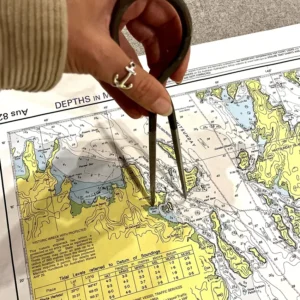
• Able to interpret a navigational chart and understand charted depths, drying heights and charted hazards
• Able to use a tide table to find times and heights of high and low water
• Able to determine direction and rate of tidal stream from a tidal atlas or from tidal diamonds
• Able to determine magnetic course to steer, making allowances for leeway and tidal stream
Alongside skills
• Communication with crew
• Awareness of other water users
• Use of warps/fenders
• Correct angle and speed of approach
• Securing boat to pontoon
360-degree turn
• How to do a 360-degree turn
Securing to a buoy
• Communication with crew
• Preparing warp
• Correct angle and speed of approach
• Securing the boat effectively
• Departing from the buoy safely
Handling under sail
• Choosing suitable sails for prevailing conditions
• Choosing a suitable area for hoisting/lowering sails
• Trimming sails correctly
• Communicating with crew before undertaking any manoeuvres
• Undertaking a check of the area before tacking and gibing
Power manoeuvres
• Awareness for other water users
• Use of a kill-cord
• Choosing a suitable area to carry out manoeuvres
• Carrying out an emergency stop
• Able to control speed on turns and warning crew before starting and
executing emergency turns